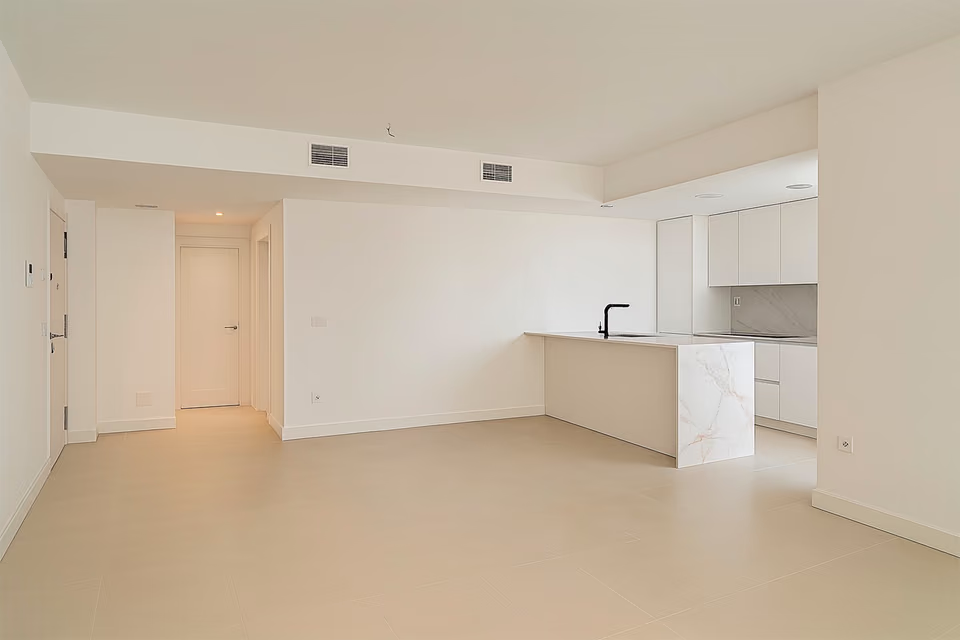
This guide covers the last stage of buying a new build on the Costa del Sol: the checks before you take the keys, as they stand in October 2026. It sets out when the checks happen, who should come, what to look at room by room, how to write the list, the papers to see before you sign, and how long the builder and the developer answer for defects under Spanish building law. British buyers often call the walk round snagging, which simply means going through the finished home with a written list of anything unfinished or faulty, for the developer to put right.
The same checks apply to every finished development, from the 50 key-ready developments on file to the 60 with handover estimated in 2027.
When the checks happen
A new home is ready to hand over when the building is finished, with its final works certificate, and authorised for occupation. In Andalucía, the occupation of a building put up under a licence, finished and built as licensed, is now subject to a responsible declaration (declaración responsable) lodged with the town hall, under article 138 of Ley 7/2021. The guide to the first occupation licence explains both papers.
Before that, the builder hands the building to the developer. Article 6 of Ley 38/1999, the building law, calls this the reception of the work (recepción de la obra). It is recorded in a document signed by both, normally within 30 days of the work being finished. It matters to you for one reason: the periods of cover in the law run from that date, not from the day you get the keys. Ask the developer for it.
The checks themselves fall between the developer’s notice that the home is ready and the signing of the deed at the notary. Book the visit in daylight, with the power and the water on, so everything can be switched on and run. If the first date offered comes before the supplies are connected, ask for a second visit once they are.
Who should come
You, if you can, and someone who knows what to look for. I go round with buyers, or on their behalf. A technical architect (arquitecto técnico) can make a fuller technical inspection, and on a villa or a townhouse, where you own the roof and the walls, it is worth considering, as the survey guide explains. If you cannot be in Spain for the visit or the signing, a power of attorney lets someone act for you.
What to bring
The check is a comparison, so bring what you bought from:
- The specification list, the memoria de calidades, with every make and finish. What a new build includes sets out what the lists usually contain.
- The plans, with the room sizes, and the contract with any changes agreed during the build.
- The brochure images, to compare what was drawn with what was delivered.
That last point is a real question on finished developments. At Lomas del Higuerón 3 and Horizon 36, both in El Higuerón, hot tubs are drawn on the roof terraces of the penthouses, and whether one comes with each penthouse is a question to have answered in writing. On 58 of the 254 specifications I hold, at least one item is a named make “or similar”, so check that what was fitted is of the same standard.
Bring a phone charger or a plug-in socket tester, a torch and a tape measure as well.
Room by room
| Where | What to check |
|---|---|
| Front door and windows | Every door and window opens, closes and locks. The seals are complete. The blinds run fully up and down. No scratches on the glass or the frames. |
| Floors and walls | Tap the floor tiles and listen for any that sound hollow. Look for chips, uneven grout and gaps at the skirting. The paint is even and complete. |
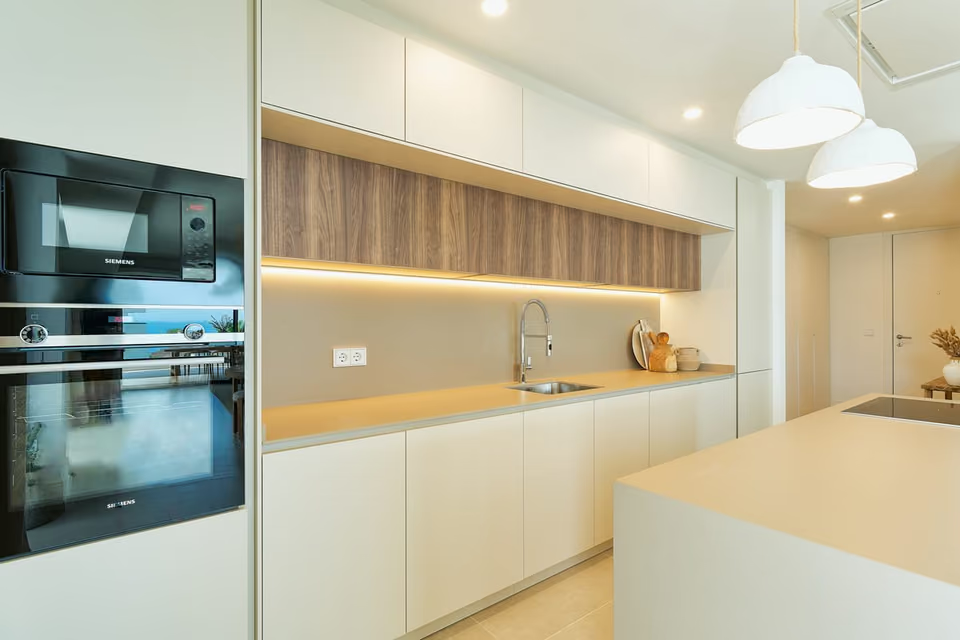
| Kitchen | Every appliance on the specification is there and works. Run the tap, fill the sink and watch it drain. Check the extractor and the worktop joints. |
| Bathrooms | Run every tap and shower until the water is hot. Flush every toilet. Check the sealant round the bath, the shower tray and the basin, and the seal on the shower screen. |
| Electrics | Test every socket and switch. Check that the circuits in the fuse box are labelled, and press the test button on the safety switch. Note which light points have no fitting. |
| Heating and cooling | Run each air-conditioning zone on heat and on cool. Switch on the underfloor heating, the heat pump for the hot water and the ventilation. |
| Terraces | Pour water and watch it run to the drains. Check that the railings are firm and the outlets clear. On a penthouse, look at the roof terrace’s surface and drains too. |
| Measurements | Measure the main rooms against the plans. |
| Parking and storeroom | The numbers match the contract. The garage remote works. |
| Shared areas | The lifts, the entrances, the pool and the gardens. In a development built in phases, ask which shared parts are still to be finished. |
| Meters and keys | Note the meter readings. Count the keys and the remote controls. |
Writing the list
Every item goes in writing: what it is, the room, and a photograph. Give the developer’s after-sales team a signed and dated copy, and agree dates for the repairs. Small items are often put right before the deed, and the rest under the one-year cover described below. A second visit before you sign confirms what has been done.
If the list is long, or something larger is wrong, what happens next depends on your contract, so your lawyer reads the completion clause with you before the visit rather than after it.
The papers to see before you sign
Alongside the walk round, your lawyer and I check the papers.
- The occupation authorisation, the licence of first occupation or the responsible declaration lodged in its place.
- The ten-year insurance policy, the seguro decenal, required by article 19 of the building law. Under article 20, a deed declaring the new building cannot be authorised by a notary or registered at the Land Registry without it.
- The energy certificate of the finished building, the second of the two certificates a new building receives under Royal Decree 390/2021. The energy certificate guide explains how to check it is registered.
- The building’s book, the Libro del Edificio. Article 7 of the building law requires the documents of the finished building, including the instructions for its use and upkeep, to be handed to the people who will live in it. Ask for your copy, together with the guarantees for the appliances.
- The bank guarantees on your stage payments, which are released once the home is handed over with its occupation authorisation, as buying off plan in Spain sets out.
- The electricity and water supplies, and how they pass into your name, which the guide to connecting a new home covers.
How long the builder and the developer answer for defects
Article 17 of Ley 38/1999 sets three periods, each counted from the reception of the work.
| Period | What it covers | Who answers |
|---|---|---|
| Ten years | Damage from defects in the foundations, supports, beams, floors, load-bearing walls or other structural elements that compromise the building’s strength and stability | Everyone involved in the build, backed by the compulsory ten-year insurance |
| Three years | Damage from defects in the building elements or installations that stop the home meeting the habitability requirements: hygiene and health, protection from noise, and energy saving with insulation | Everyone involved in the build |
| One year | Defects in the finishes | The builder |
Three things follow from it.
- The developer answers to you in every case. Article 17.3 makes the developer jointly liable with the others involved for damage caused by defects in the building. You do not have to work out whether the builder, the architects or a supplier was at fault.
- The clock starts at the reception of the work. That date comes before your keys, so on a home finished some months before you buy, part of the one-year period may already have run.
- Claims have a time limit. Under article 18, a claim for damage must be brought within two years of the damage appearing.
Article 19 also lets the one-year cover be secured by the developer keeping back 5% of the cost of the works from the builder, instead of by an insurance policy. New build or resale explains what remains of the cover when a home is resold within the ten years.
After you move in
Some things only show with use: a drain that runs slowly, a door that sticks as the weather changes, a terrace that holds water after the first heavy rain. Write to the developer’s after-sales team as each one appears, with the date and photographs, and keep copies. Reporting finishing defects in the first year keeps them inside the one-year period.
How I handle it
On a new build I go round the finished home with you, or for you when you cannot be there, with the specification, the plans and the brochure, and I write the list room by room with photographs. I send it to the developer, agree the dates and go back to check the work before you sign. Where the home or the circumstances call for it, I arrange for a technical architect to inspect it too.
Alongside that, I make sure your lawyer has the occupation authorisation, the ten-year insurance, the final energy certificate and the date of the reception of the work before the deed. To plan the handover of a home you have bought or are about to reserve, book a call. Buying with me sets out how I work.
Common questions
When do you inspect a new build in Spain before completion?
What should I check before taking the keys to a new build in Spain?
How long is the guarantee on a new build in Spain?
Who fixes defects found after completion?
Do I need a surveyor to check a new build in Spain?
What this relates to